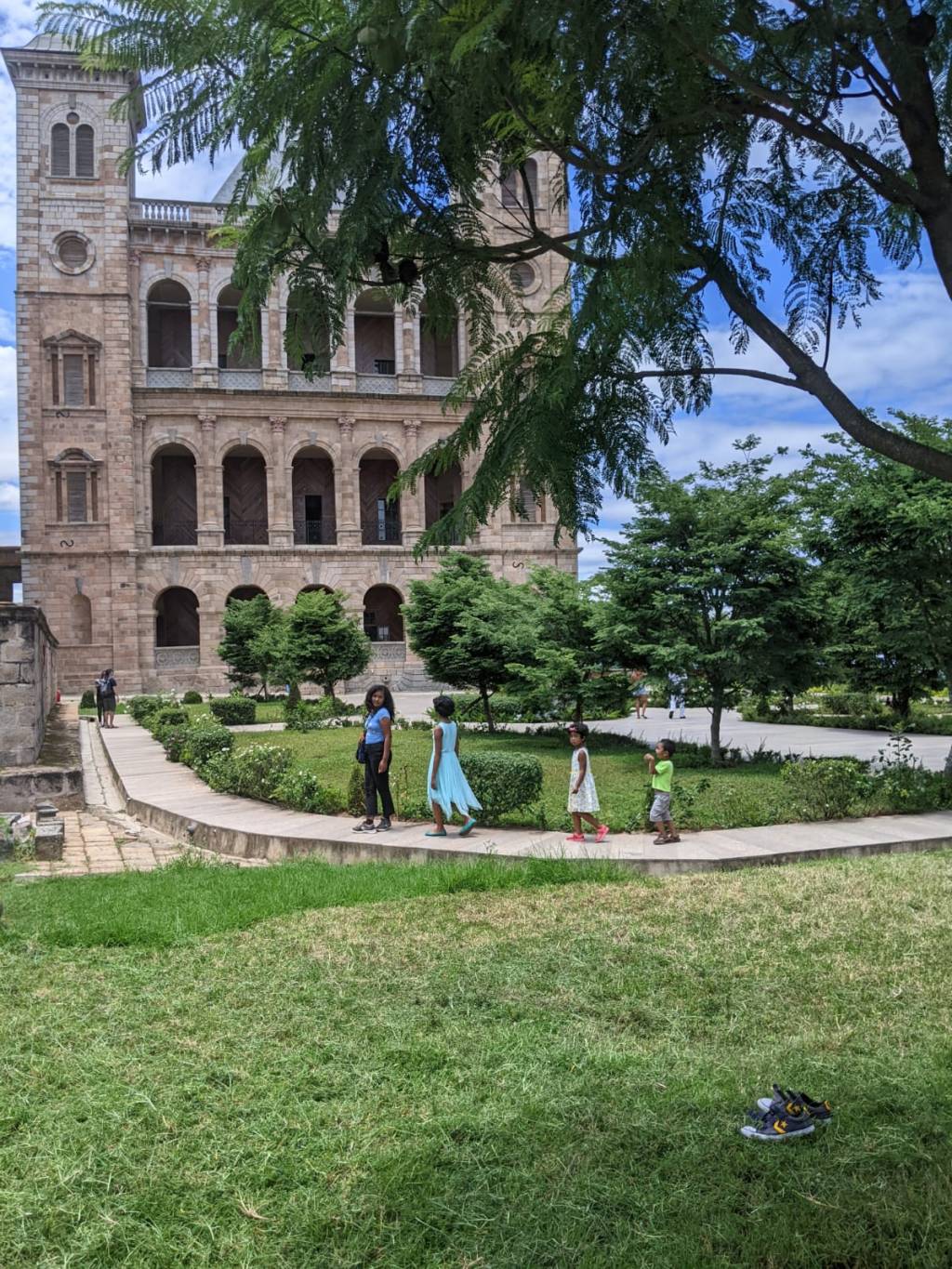
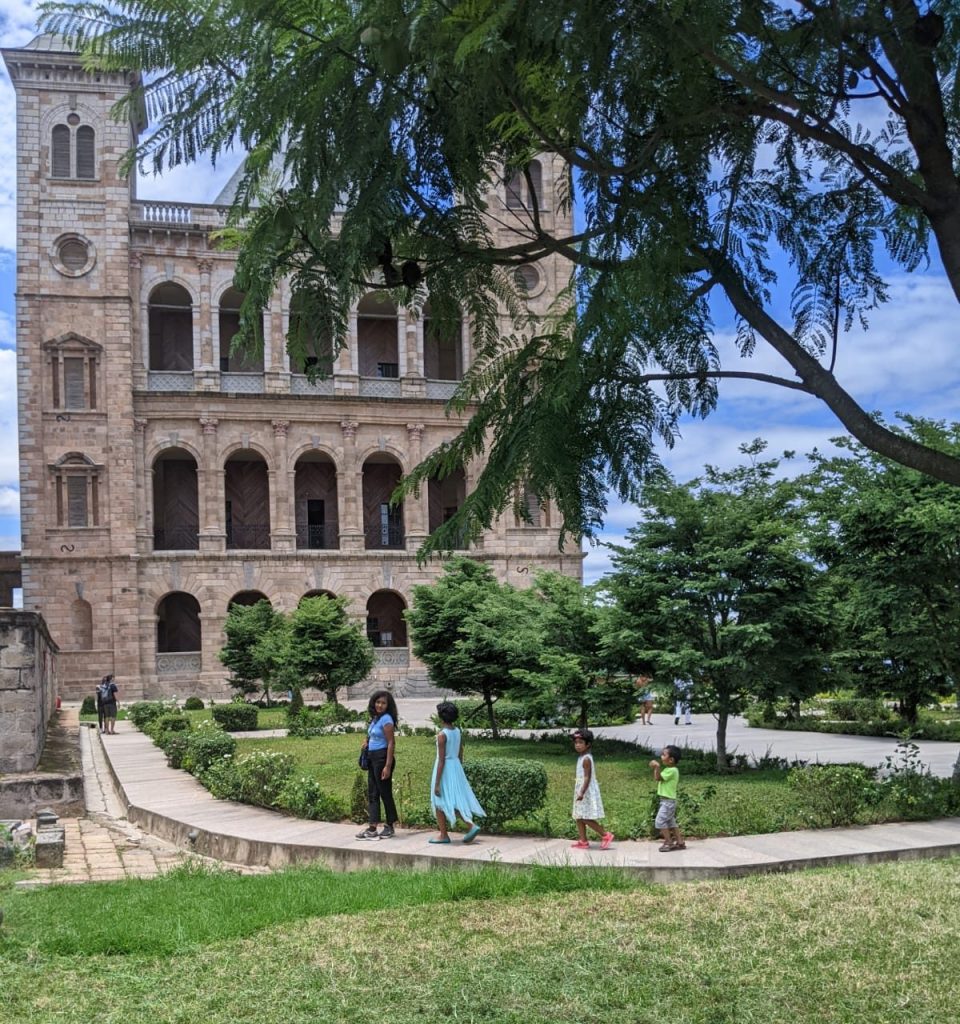
You can see it from almost everywhere in Antananarivo. Whenever we found ourselves lost between the rice paddies, the steep lanes and the red-brick houses, we only had to look up. The Rova of Manjakamiadana, the Queen’s Palace, sits at the top of the hill of Analamanga and watches over the city.
So one morning we decided to climb up and spend a few hours there with our kids. We ended up staying three.
Not a Lesson, a Walk Through History
Our guide started at the beginning. In the early 17th century, King Andrianjaka took this hill and built his city here. Antananarivo means “the city of the thousand,” named, so the story goes, after the thousand soldiers who guarded it. Our children were hooked from the first minute.
Then came the kings and queens, and I’ll admit I learned as much as they did:
Andrianampoinimerina, who reunified the country and made this hill his capital.
Radama I, who opened the island to Europeans and missionaries.
Ranavalona I, who closed it again.
Ranavalona III, the last queen, whose reign ended with the French conquest of 1895.
Kings, queens, big decisions and dramatic reversals: no wonder the kids listened.
The Questions That Kept Coming
Religion was where the kids really started asking. We talked about the ancestors, the sacred objects, the fady (taboos), and then the court’s turn toward Christianity. “Why would a queen change her religion?” “What happens to the old ways?” We didn’t have all the answers, but I loved that they wanted them. Especially because we are Christian.
Reading the Land from Above
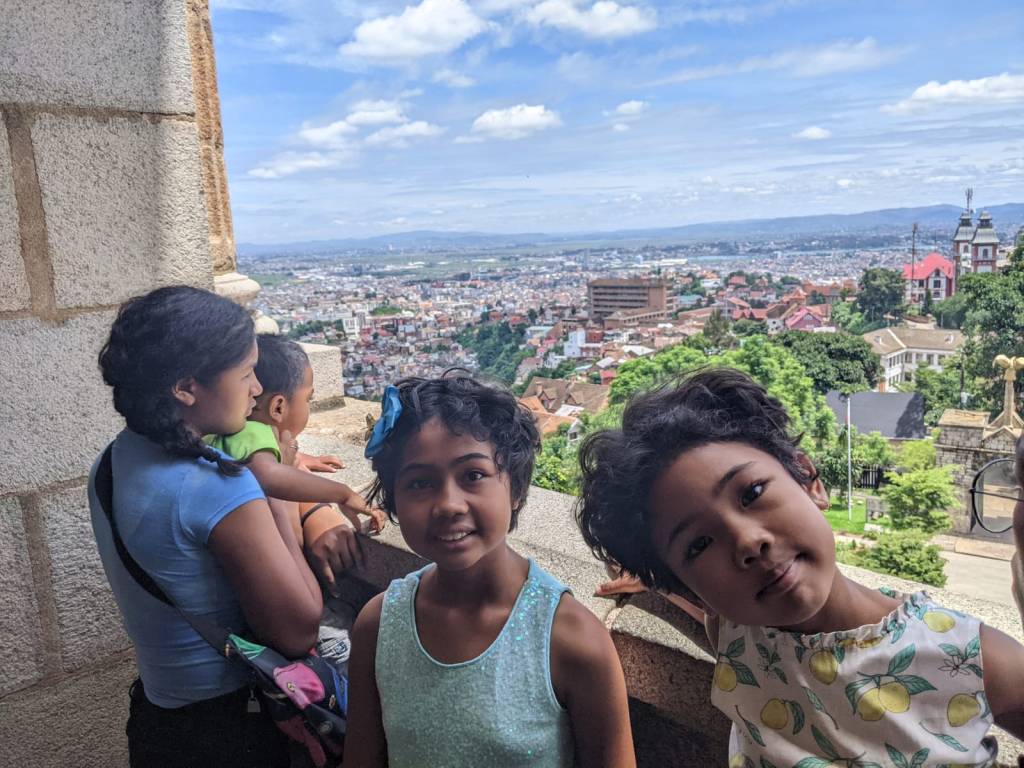
The hilltop is also the best geography classroom we’ve found. From up there, you can see why a capital was built here: the height, the defense, the view in every direction. The rice plain below shows how a city eats. The way the neighborhoods tumble down the slope shows who held power and who didn’t. And the surrounding hills, some of them sacred, reminded us that in Madagascar the land is spiritual as well as practical.
The Coliseum That Never Belonged to the Kings
Inside the grounds stands a coliseum, and it has nothing to do with the royal era. It didn’t exist in the time of the kings and queens: it was only built in the 2020s, and it was never part of the original royal plan. Unsurprisingly, it got people talking. A very coliseum inside one of the island’s most historic sites is bound to raise eyebrows.
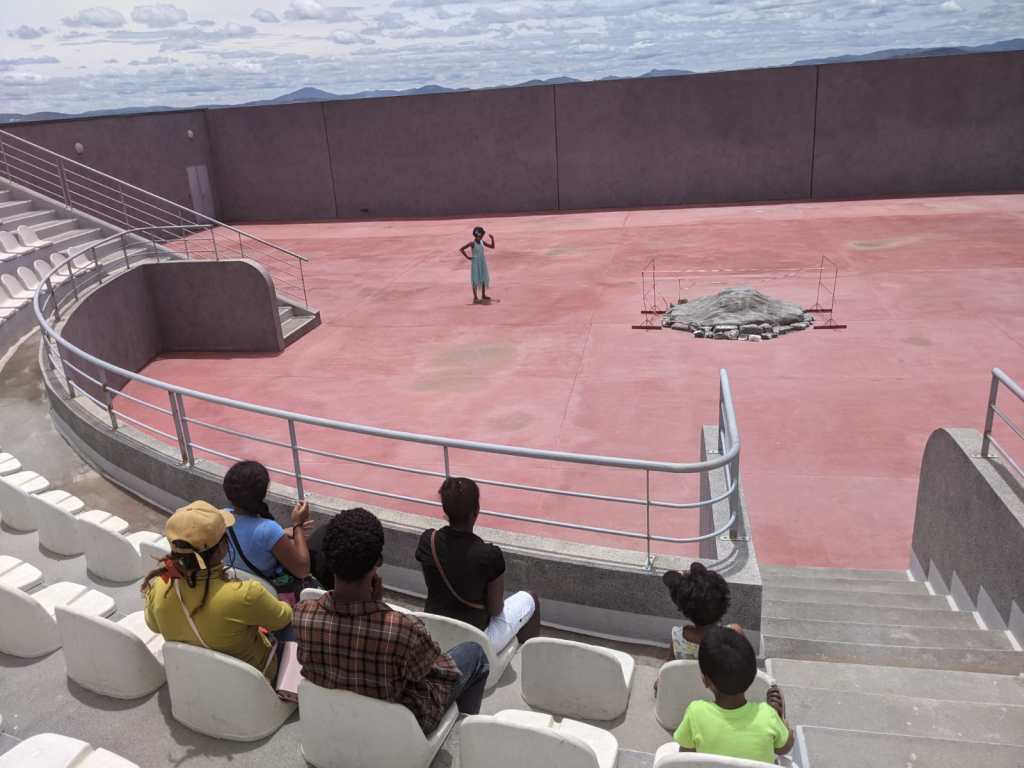
Itiana, on the other hand, was thrilled. The moment she saw it, she saw a stage. And for a few minutes, in the middle of Madagascar’s royal heritage, she put on a little show of her own, with us as the audience.
It was a nice reminder that a place can be many things at once: a memory of the past, a topic of debate today, and, for a child, the perfect spot to perform.
If You Go
Take a guide, in English or French. It changes everything.
Plan on two to three hours, with comfortable shoes and water.
Teach the kids a couple of royal names beforehand so they have something to hold onto.
Leave room for their questions, and for their imagination.
Closed on Tuesday ,check opening hours and access before you head up, since restoration work has continued since the 1995 fire.


Leave a Reply